.gif)
.gif)

Most slides don’t fail because the presenter lacks confidence or intelligence. They fail because the system behind them is broken.
For decades, presentation software has given us a blank slide and called it freedom. Total flexibility. Total control. But that blank canvas quietly forces every presenter to become a writer, designer, and strategist all at once. When you’re under deadline, that’s not empowering. It’s overwhelming.
At Beautiful.ai, we believe the problem isn’t talent. It’s tooling. And once you fix the system, better slides follow.
Why your slides aren’t working (and what to do instead)
Here’s why most slides don’t work—and what to do instead.
1. Too much text (and not enough signal)
The most obvious issue is overloaded slides. Lengthy paragraphs replace purpose, and bullet points become the main focus of your design. This causes the audience to read instead of listening, which can compromise your overall message.
But contrary to popular belief, too much text isn’t just a design flaw. It’s usually a clarity problem. When you’re unsure what matters most, everything makes it onto the slide.
What to do instead: discipline your slides to one core idea at a time.
If you can’t summarize the point of a slide in a single sentence, it’s not ready. Reduce supporting text to only what reinforces that point. Slides are visual aids, not teleprompters. Let your spoken words carry nuance. Let the slide carry the signal.
2. Headlines that label instead of lead
Many slides look professional but don’t actually communicate anything. A title like “Q4 Revenue” or “Marketing Strategy” simply names a topic. It doesn’t deliver insight.
When a slide’s headline is neutral, the audience has to interpret the meaning themselves. That’s risky as different people will draw different conclusions.
What to do instead: turn every headline into a takeaway.
Instead of “Q4 Revenue,” write “Q4 Revenue Exceeded Forecast by 18%.” Instead of “Customer Feedback,” write “Customers Value Speed Over Price.” Now your slide is doing strategic work. It’s guiding interpretation, not just presenting information.
This shift—from labeling to leading—is one of the fastest ways to improve any presentation.
3. Weak visual hierarchy
Even strong ideas fall flat when design doesn’t guide the eye. When everything is the same size, same weight, and same color, nothing stands out. The audience doesn’t know where to look first or what matters most.
Poor hierarchy creates cognitive friction. Your audience works harder than they should to understand your point.
What to do instead: design for emphasis.
Make the key idea visually dominant through size, contrast, or placement. Use clear spacing to separate primary insights from supporting details. Align elements consistently so the slide feels intentional, not improvised.
Good design isn’t just about aesthetics, it’s about direction.
4. Manual formatting is draining your thinking
There’s a hidden reason slides underperform: the time and energy spent formatting them.
Resizing text boxes, adjusting alignment, tweaking colors, moving elements by a few pixels—slide after slide—are draining your battery. Every manual design decision consumes cognitive bandwidth that should be spent refining the story. When formatting becomes the focus, clarity inevitably suffers.
What to do instead: separate message from mechanics.
Build your content first. Then rely on structured layouts and intelligent templates that handle hierarchy, spacing, and alignment automatically. The less time you spend nudging pixels, the more time you spend strengthening your argument.
Why these problems persist
If these issues are so common, why haven’t we solved them?
Because traditional slide tools prioritize flexibility over guidance. They assume everyone knows how to design. They assume everyone understands visual hierarchy. They assume everyone can instinctively structure information for maximum clarity.
That assumption is outdated.
The blank slide has become a liability. It invites inconsistency, encourages text dumping, and pushes clarity to an afterthought.
At Beautiful.ai, we’re actively trying to solve this presentation design pain point. Great presentations don’t need to be handcrafted from scratch every time. They’re built on systems that encode best practices by default.
What actually makes slides effective
Effective slides share a few defining characteristics.
They focus on one idea at a time and make that idea unmistakably clear. Their headlines communicate conclusions. Their layouts reinforce structure. Their visuals reduce cognitive load instead of adding to it. And their design is consistent across the entire presentation.
Most importantly, they make it easy for the audience to understand and remember what matters.
How AI changes the game
The real shift in presentation design doesn’t solely depend on skill, but rather the tools you leverage.
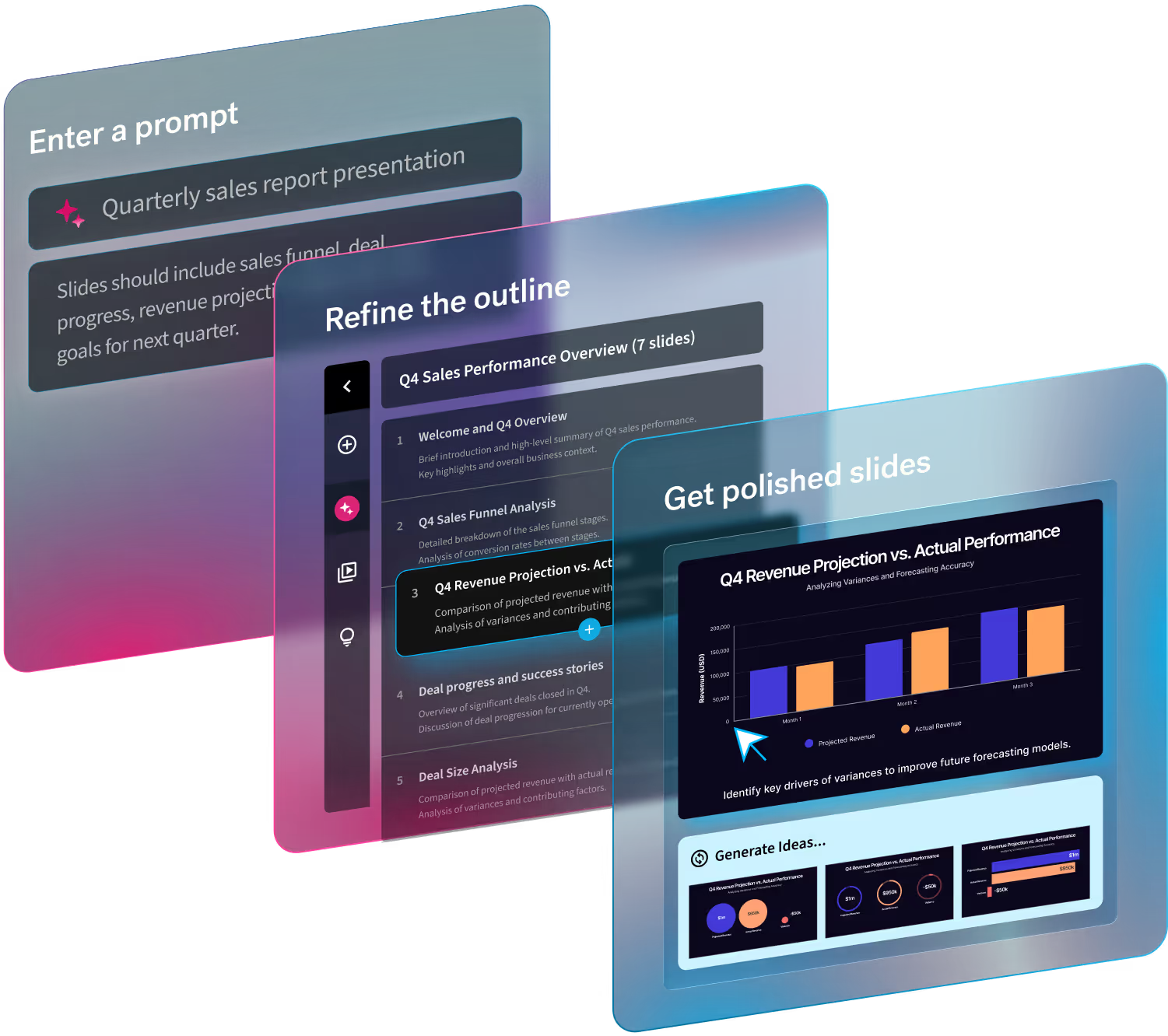
AI-powered presentation tools eliminate the most common failure points before they happen. Instead of starting with a blank canvas, you start with a solid structure to iterate on. Smart layouts adapt as you add content, typography scales to maintain hierarchy, and spacing and alignment stay consistent.
This doesn’t remove creativity, it removes unnecessary friction, unlocking more creative storytelling.
When the granular design details are handled automatically, you can focus on thinking: sharpening your narrative, refining your insights, strengthening your recommendations.
That’s the philosophy behind Beautiful.ai. We believe great slides shouldn’t depend on design expertise or endless tweaking. They should be the natural outcome of a smart system that supports your story as you go.
If your slides aren’t working, it’s not because you’re bad at presenting. It’s likely because you’re using the wrong tool.



.gif)