



AI doesn’t save time by default
AI deck generation is becoming the new norm for presenters that need polished decks quickly, but lack the time and design skills to create them.
But there’s a familiar issue with these presentations: the messaging is generic, the slides don't fit your audience, and the design needs work. So, you spend the next hour painstakingly reworking the entire deck. At that point, the AI isn’t actually saving you any time.
Poor prompting creates hidden costs that many teams don't notice. On one hand, you’re paying for AI tools that still require extensive editing. Then there's the opportunity cost. Every minute spent fixing weak output is time that could have spent preparing for your presentation or moving on to the next project.
The problem usually isn't the AI itself. It's the information you're giving it. Generative AI doesn't understand your business, your audience, or your objectives unless you provide that context.
The more specific your prompt, the closer the first draft gets to something you can actually use. Leave out key details, and AI fills the gaps with assumptions that often lead to generic, forgettable presentations. AI generated decks need better prompts to create slides worth presenting.
Don’t make AI do guesswork
Consider these prompts: "Make a sales deck” or "Create slides about our product." Neither give AI enough information to produce a useful presentation.
A sales deck for a software startup looks nothing like one for a manufacturing company. A product presentation for existing customers has different goals than one for prospective buyers. Without context, AI has to guess what you mean.
The strongest prompts answer four simple questions:
Who is the audience? What do they already know? What do they need to understand?
What is the objective? Should the presentation persuade, educate, or secure a decision?
What context matters? Include company information, supporting data, industry details, or any background AI wouldn't already know.
What should the final output look like? Specify the tone, presentation length, visual style, or any formatting preferences.
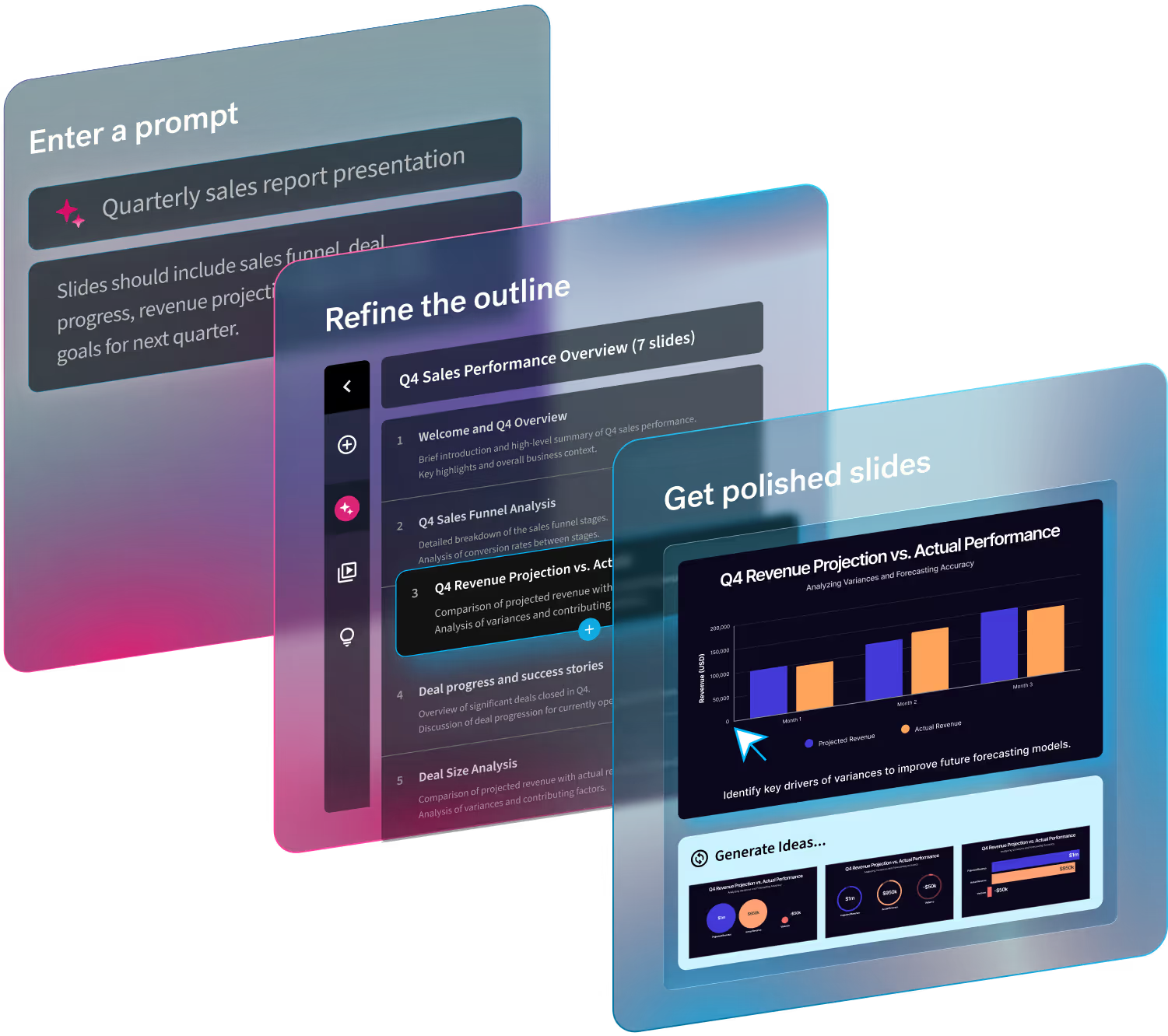
Instead of asking AI to "make a sales deck," you might say: "Create a 10-slide sales presentation for IT directors at mid-sized healthcare organizations evaluating cloud security software. Focus on compliance, implementation speed, and measurable ROI. Use a professional tone and include a comparison slide and customer success story."
The reason this matters comes down to how generative AI works. It predicts the next most likely response based on patterns in its training data and the information you've provided. When important details are missing, it fills those gaps with generalized content that may not reflect your business, your audience, or your message.
Better prompts don't make AI smarter. They simply give it enough direction to produce a stronger first draft.
Bad prompts cost you
Weak prompts don't just produce mediocre presentations. They create costs that ripple throughout the entire workflow.
Instead of reviewing and polishing a solid draft, you're rewriting messaging, restructuring slides, and cycling through multiple rounds of revisions. That extra effort delays projects and pulls attention away from work that actually moves the business forward.
When AI has to invent missing context, presentations often become vague and repetitive. Messaging drifts away from your brand voice. Teams unknowingly create decks that feel interchangeable with competitors because everyone starts from the same generic output.
Audiences can usually tell when a presentation feels generic. Whether you're pitching a client, updating leadership, or presenting to prospects, credibility depends on showing that your recommendations are thoughtful, relevant, and grounded in real business knowledge.
AI should reduce the work involved in creating presentations. Poor prompting often has the opposite effect.
Treat prompting as a “must learn” skill
Most professionals were never taught how to write prompts. AI tools arrived quickly, and because they were easy to access, many people assumed they were equally easy to use well. The result is a false sense of productivity. Teams adopt AI expecting immediate efficiency gains without learning the skills that actually improve output.
Part of the challenge is that AI sounds confident. It responds conversationally, produces polished language, and often appears to understand more than it actually does. That makes it easy to assume the first draft is good enough.
Busy teams are under pressure to deliver more in less time, so first drafts frequently become final drafts. Presentations lose the nuance, persuasion, and company-specific insights that only people can provide.
Prompting deserves the same attention as any other professional skill. The teams seeing the greatest return from AI aren't simply using it more often. They're learning how to provide better direction, review outputs critically, and build repeatable workflows that improve over time.
That learning starts with leadership. Organizations that provide guidance, share best practices, and encourage experimentation help employees get far more value from AI than organizations that leave everyone to figure it out on their own.
Improve AI use across teams through collaboration
Strong prompting shouldn't stay with one person.
When someone discovers a prompt that consistently produces high-quality presentations, save it, document why it works, and share it with the rest of the team. Building a library of reusable prompts helps everyone improve while creating more consistent outputs across departments.
The same principle applies to presentations themselves. Standardizing common presentation types reduces unnecessary work and keeps messaging aligned. Instead of rebuilding decks from scratch, teams can start from shared templates that already reflect approved branding and structure.
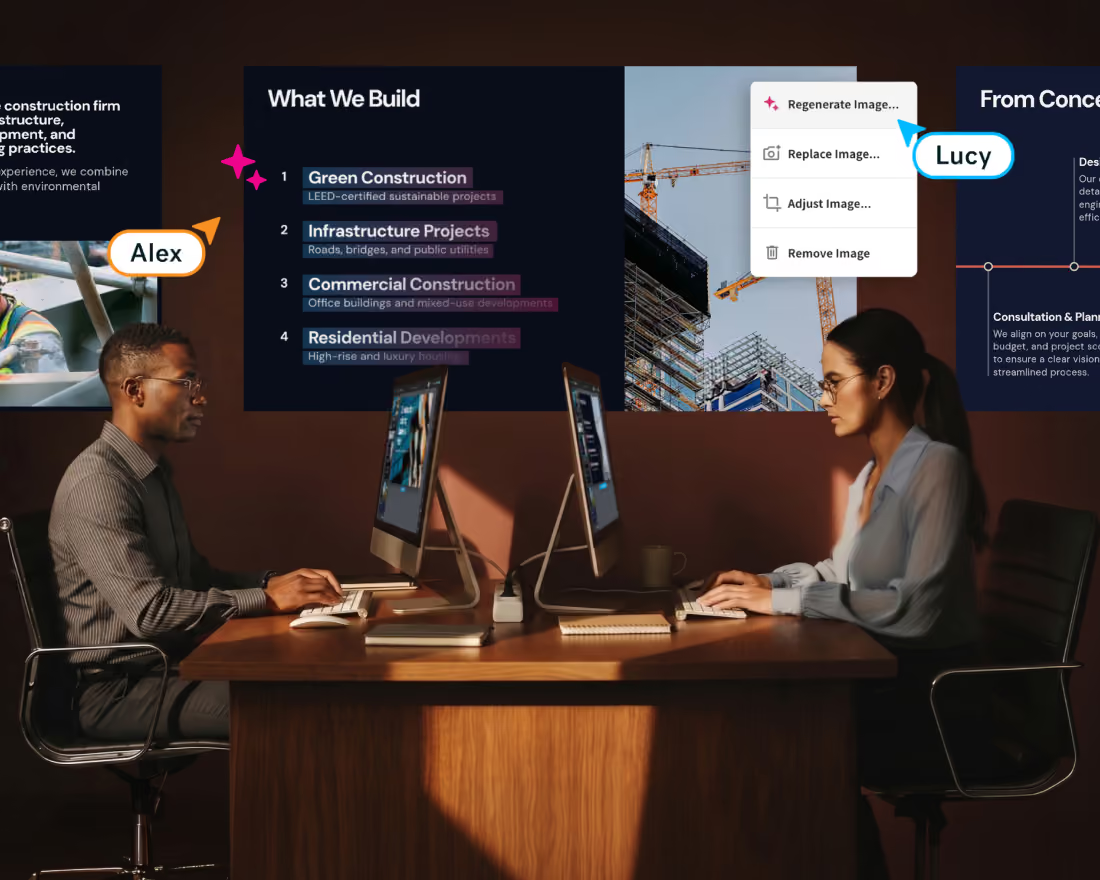
This is where presentation platforms can reinforce good prompting habits. In Beautiful.ai, organizations can create Team templates and Brand Kits that keep presentations visually consistent while giving individuals the flexibility to tailor content for their audience. Instead of spending time fixing layouts or checking brand compliance, teams can focus on strengthening the story and refining the message.
Even with better prompts and better systems, human review remains essential. AI can accelerate research, organize ideas, and produce useful first drafts, but strategy, persuasion, and accuracy still depend on people. Reviewing every presentation before it goes out the door ensures the final product reflects your expertise and doesn’t look like everyone else’s generic deck.
Better prompts create better presentations
The easiest way to improve AI output isn't generating more drafts. It's improving the first prompt. The biggest productivity gains don't come from using AI more often. They come from using it more intentionally.
Teams that consistently produce high-quality presentations understand this. They invest in better prompting, share what works, and build repeatable workflows that improve results over time. AI becomes an accelerator because they've learned how to give it the information it needs to succeed.
As AI becomes a standard part of presentation creation, prompting is becoming just as important as writing, design, and storytelling. Teams that treat it as a skill, rather than an afterthought, will spend less time fixing presentations and more time delivering ideas that make an impact.
If you're ready to spend less time fixing AI-generated presentations and more time communicating your ideas, try Beautiful.ai. With AI-powered presentation creation, Smart Slides, and built-in design intelligence, you can turn strong prompts into polished, professional presentations faster.

.avif)


.avif)
