
.avif)

Sales enablement content helps sales teams sell more effectively by giving them the right information, tools, and assets at the right time. When done well, it shortens sales cycles, builds buyer confidence, and helps reps deliver more consistent, compelling conversations.
If you’re building or refining a sales enablement strategy, you might be wondering what actually counts as sales enablement content?
Below are some of the most effective and widely used examples—including why presentations play such a central role.
1. Sales presentations
Sales presentations are one of the most critical, and versatile, forms of sales enablement content.
They’re used across the entire funnel, from early discovery conversations to executive-level pitches and final decision meetings. A strong sales presentation helps reps tell a clear story, tailor messaging to the audience, and visually reinforce value.
Common sales presentation examples include:
- Company overview decks
- Product or solution presentations
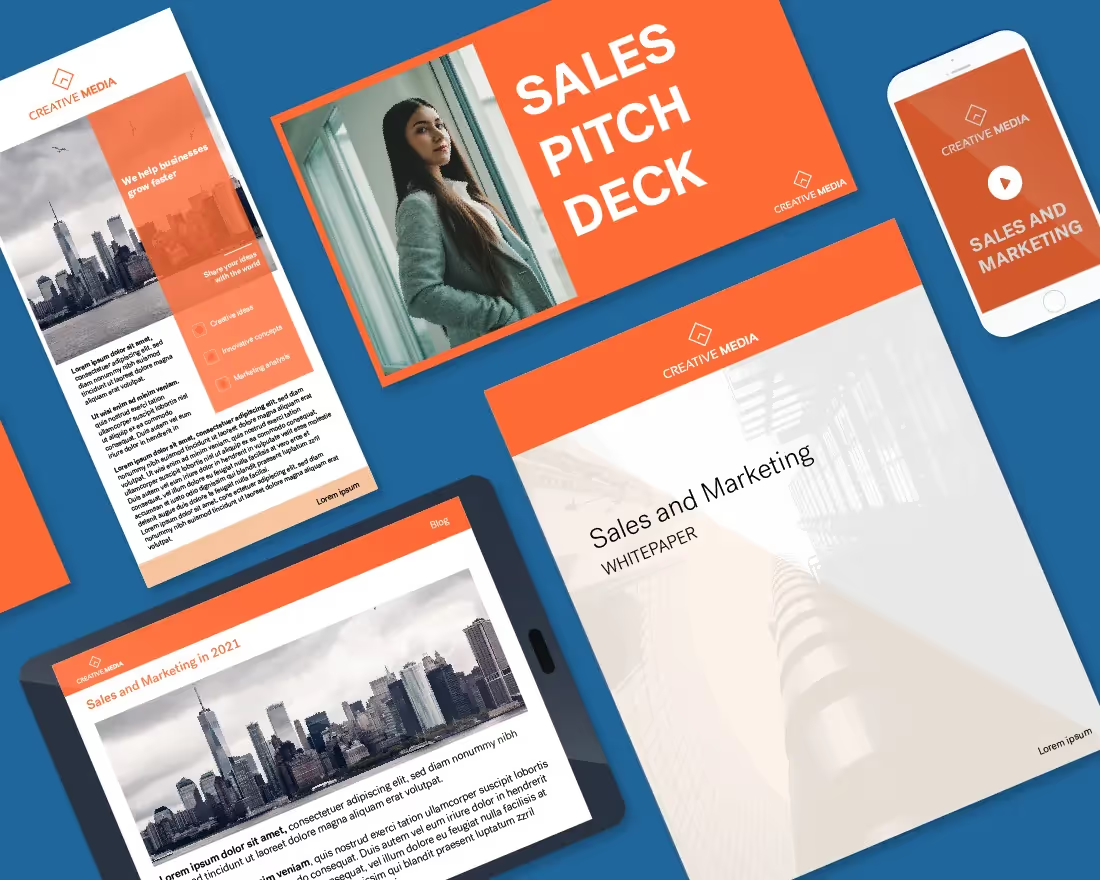
- Industry-specific pitch decks
- Executive or board-level presentations
- Proposal and pricing decks
The best sales presentations are:
- Easy to customize for different buyers
- Consistent with brand and messaging
- Designed to support conversation, not replace it
Because presentations evolve constantly, many teams rely on tools that make it easy to update content, maintain design consistency, and iterate quickly without starting from scratch.
2. Sales playbooks
Sales playbooks provide structured guidance on how to sell.
They typically include:
- Ideal customer profiles (ICPs)
- Messaging frameworks and positioning
- Discovery questions
- Objection-handling guidance
- Competitive talking points
- Deal stage recommendations
Playbooks help new reps ramp faster and give experienced reps a shared foundation, ensuring consistency across the team.
3. Case studies and customer stories
Case studies are high-impact sales enablement assets because they show proof, not promises.
They help buyers answer questions like:
- “Has this worked for companies like mine?”
- “What results can I realistically expect?”
Case studies can be delivered as:
- One-pagers
- PDFs
- Slides embedded into presentations
- Short videos or testimonials
When used in sales conversations, case studies build trust and reduce perceived risk.
4. Product one-pagers and datasheets
Product one-pagers and datasheets are concise, reference-style assets that summarize:
- Key features and benefits
- Use cases
- Technical specifications
- Pricing tiers or packaging (when appropriate)
These assets are especially useful for follow-up emails after calls or as leave-behind content for stakeholders who weren’t in the room.
5. Competitive battlecards
Competitive battlecards help sales reps confidently navigate head-to-head comparisons.
They typically include:
- Key differentiators
- Strengths and weaknesses vs. competitors
- Common objections and suggested responses
- “Do not say” guidance
Battlecards are most effective when they’re easy to access, regularly updated, and aligned with real-world sales conversations.
6. Email and outreach templates
Not all sales enablement content is visual.
Email templates, call scripts, and messaging snippets help reps communicate more efficiently while staying on-brand. These assets are often used for:
- Cold outreach
- Follow-ups
- Post-demo recaps
- Proposal delivery
Good templates balance structure with flexibility so reps can personalize without rewriting from scratch.
7. Training and onboarding materials
Sales enablement also includes internal-facing content designed to support learning and development.
Examples include:
- Onboarding decks
- Product training presentations
- Certification materials
- Recorded demos and walkthroughs
These assets help teams stay aligned as products, messaging, and markets evolve.
Why presentations sit at the center of sales enablement
While sales enablement content takes many forms, presentations often serve as the hub that connects everything together.
A single sales deck might include:
- Messaging from the playbook
- Visuals from product one-pagers
- Case study slides
- Competitive positioning
- Pricing and proposal details
That’s why many sales teams invest heavily in making presentations easy to build, update, and tailor—without sacrificing consistency or design quality.
Sales enablement content isn’t about having more assets — it’s about having the right ones that help sales teams move deals forward.
From playbooks and case studies to email templates and battlecards, each asset plays a role. But sales presentations remain one of the most powerful tools in the sales enablement toolkit, bringing messaging, proof, and storytelling together in one place.
When sales enablement content is clear, current, and easy to use, sales teams spend less time searching and more time selling.



.avif)

.avif)
